
Door and Window Trim
Where the wall surface meets a door or window jamb, casing creates the finished border that conceals the transition.
Longboat Key, FL
A well-finished room feels resolved: flooring meets walls cleanly, doors and windows have a deliberate frame, ceilings transition without an unfinished gap, and new work belongs with the rest of the home.

A well-finished room feels resolved: flooring meets walls cleanly, doors and windows have a deliberate frame, ceilings transition without an unfinished gap, and new work belongs with the rest of the home. Professional trim installation in Longboat Key brings those small but visible details together after a remodel, room refresh, or new interior build-out.
Standard trim installation focuses on clean, consistent baseboards, casing, and molding at the floor, openings, and ceiling. Finish carpentry goes further, shaping proportions, profiles, joint placement, and transitions to suit the room rather than applying a one-size-fits-all detail. That distinction matters in homes with existing millwork, vaulted ceilings, waterfront views, or a more refined architectural character: a narrow modern casing can support a clean-lined renovation, while a more substantial profile may better carry a traditional interior.
Coastal living also changes the conversation. Interior detailing should accommodate humid conditions without sacrificing crisp reveals and aligned joints, while exterior trim repair addresses a different challenge altogether: weather-exposed pieces around openings and roof-edge details may need evaluation beyond the visibly worn surface. Salt air, moisture, and wind-driven rain make it important to distinguish a cosmetic touch-up from a repair that addresses deteriorated material and the conditions behind it. Finish carpentry Longboat Key homeowners choose should therefore look tailored indoors and considered where the home meets the weather.
Room scale and the lines already in place should guide the trim package. Baseboards cover the floor-to-wall transition and establish a visual perimeter; a taller, simpler profile can give an open living area more presence, while a shorter profile may suit a compact bedroom or a clean contemporary update. Door and window casing frames each opening, concealing the gap between the wall finish and jamb while giving new doors, replacement windows, or existing openings a coordinated edge.
Crown molding finishes the wall-to-ceiling intersection and can soften that transition in formal rooms, dining areas, or spaces with sufficient ceiling height. Chair rail is a horizontal molding installed partway up the wall; it can divide paint colors or wall finishes and create a measured, traditional detail. Decorative molding includes smaller applied profiles used to build layered headers, framed wall sections, or tailored accents. These choices are not interchangeable: crown draws the eye upward, casing organizes openings, and wall-height moldings introduce structure across a broad surface.
Interior trim installation Longboat Key homeowners request also includes the less conspicuous transition details that keep adjoining materials from looking improvised. These may include return pieces where a baseboard ends, clean transitions between different trim profiles, and carefully planned connections at cabinets, stair parts, built-ins, and flooring. A strong result has consistent reveals, the narrow, intentional shadow lines around doors and windows, plus profiles that align from one piece to the next rather than wandering with the wall.
That precision comes from layout before cutting. Walls and ceilings are rarely perfectly straight, especially where new finishes meet older construction, so finish carpentry may require scribing a piece to follow an uneven surface instead of forcing a straight board against it. Outside corners need crisp miter joints; inside corners need tightly fitted connections that do not leave distracting gaps. Controlled joints, aligned returns, and deliberate placement of seams are the details that make baseboards, casing, and molding read as part of the room rather than as separate pieces added at the end.
A feature wall can give a room its own identity without changing its footprint. Wainscoting uses paneling or molding on the lower portion of a wall and often suits dining rooms, hallways, and bedrooms where a horizontal division adds order. Board and batten builds a vertical grid with narrow applied strips, making it a natural fit for taller walls or relaxed coastal interiors. Shiplap accents use closely spaced horizontal boards for texture; they work best as a focused backdrop rather than on every surface.
Custom trim Longboat Key homeowners choose should follow the room’s proportions, not a decorating trend. A subtle painted wall panel system can bring depth to a condominium interior or waterfront living space while keeping the room light and calm. More dimensional treatments, layered picture-frame molding, deep panels, or coffered ceilings with recessed grids, make a stronger architectural statement but need enough ceiling height, open wall area, and visual breathing room. Panel spacing should relate to furniture placement, windows, doors, and existing ceiling lines; a grid that lands awkwardly behind a headboard or cuts through an opening can look accidental.
Finish carpentry is the precise on-site installation and fitting of visible woodwork: applied wall molding, ceiling details, decorative headers, trim around a built-in, and the finished pieces that connect an architectural treatment to the room. Custom millwork is fabricated woodwork made for a particular space, such as a window seat, bookcase, media surround, bench, or cabinet-style built-in. A decorative wall treatment may need finish carpentry alone, while a library wall with shelving, lower cabinets, and integrated trim needs both interior millwork and finish work to make the installation read as one composition.
Built-in details can turn otherwise unused alcoves, window walls, and long living-room elevations into purposeful storage or display areas. Custom decorative molding can also extend the architecture around those pieces so they feel established rather than simply placed against the wall. The strongest designs begin with measured conditions and a clear decision about restraint: one well-proportioned coffered ceiling or paneled dining room usually carries more impact than competing feature treatments throughout the home.
Outside, the priority shifts from visual continuity to managing the vulnerable edges where cladding, openings, and roof-line details meet. Soft wood, peeling paint, open joints, failed caulk, staining, swelling, or trim pulling away from a window or door are reasons to look beyond the visible board. Window surrounds, door casings, fascia-adjacent trim, and other projecting details need to direct water outward and maintain clean transitions; a fresh coat of paint alone does not resolve a joint or concealed area that has already deteriorated.

Exterior trim repair in Longboat Key begins by separating a localized trim failure from a broader condition. A limited repair may be appropriate when the surrounding wall finish is sound, the opening’s transitions remain intact, and deterioration is confined to accessible pieces. If staining extends beyond the trim, joints have separated repeatedly, or adjacent materials show movement, the repair scope may need to address the conditions behind and around the visible detail, not simply replace the face board.
Material selection should suit the profile, exposure, and neighboring finishes. Painted wood offers the crisp edges, traditional grain, and shaped profiles that can be important when matching an established façade, but it depends on a maintained paint system and carefully protected end cuts and joints. PVC trim is a paintable cellular plastic option with a smooth, uniform appearance; it can be a strong choice for highly exposed flat boards and surrounds, though its movement and fastening approach should be allowed for in the layout. Composite trim offers another manufactured alternative, often selected where a wood-like appearance is desired with a different maintenance and movement profile. None is automatically the right answer for every elevation.
Fasteners, joint treatment, and the relationship to flashing matter as much as the replacement board. A good exterior trim installation uses a layout that sheds water rather than trapping it at horizontal ledges, keeps transitions orderly, and avoids pairing materials in a way that leaves an exposed gap as they move differently. For trim installation Longboat Key homeowners can rely on, the practical goal is a repaired exterior detail that looks intentional while addressing the moisture-sensitive conditions that caused concern in the first place.
A remodel can look pieced together when the new kitchen, flooring, or enlarged doorway receives one trim language while the adjoining rooms retain another. The first decision is whether the goal is an exact continuation or an intentional transition. Finish carpentry Longboat Key homeowners choose for an addition or targeted update can preserve the established character of the house, or create a coordinated new package that makes the renovated area feel deliberately renewed.
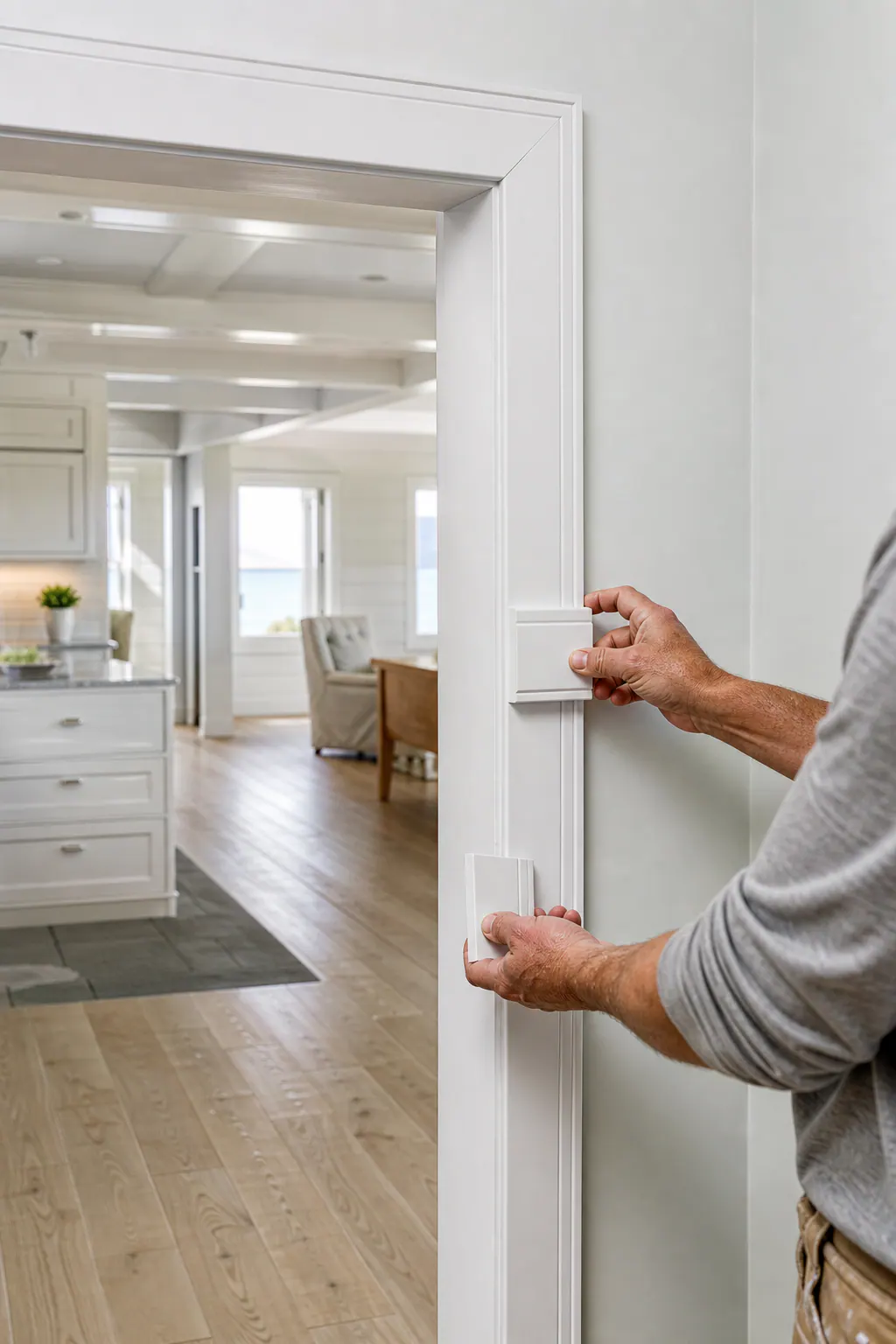
For a close match, existing baseboards, casing, crown, and other visible pieces are measured before new material is selected. Profile depth and height, casing width, the reveal left between casing and jamb, paint color and sheen, and the way corners and returns are finished all affect whether new work blends in. A near match in profile can still look wrong if the new satin-painted casing meets older semi-gloss trim, or if a new baseboard sits at a noticeably different height beside existing flooring.
An exact match is often the stronger choice when a kitchen renovation opens directly into an unchanged living area or replacement cabinetry meets original window trim. In contrast, a whole-home flooring update, multiple remodeled openings, or a kitchen that gains crown molding may benefit from carrying one refreshed baseboard, casing, and crown profile through the connected spaces. That approach avoids asking a discontinued or heavily layered older detail to compete with a cleaner new design.
Stain-grade woodwork deserves an additional level of selection. Wood species, grain direction, color variation, and joinery remain visible beneath the finish, unlike painted trim where filler and minor variation can disappear. For custom trim Longboat Key projects involving stained cabinetry, beams, or built-ins, a sample piece beside the existing finish is a useful checkpoint: similar color alone is not enough if the grain character and sheen tell a different visual story.
The best time to resolve small finish questions is before the first piece is cut. Trim installers in Longboat Key typically begin with an on-site review of the walls, ceilings, openings, floor height, access, and the condition of surfaces that will receive new work. A bowed wall, uneven ceiling line, moisture-marked area, or out-of-square doorway can change how a casing, baseboard, or crown detail needs to be fitted.
Next comes a clear plan for profiles, material, paint or stain expectations, and the stopping points where new trim meets existing finishes. This is also the point to coordinate with flooring, cabinetry, electrical plates, window or door replacement, and painting. Installing baseboards before final flooring, for example, creates a different edge condition than installing them after the floor is complete.
During installation, a finish carpenter protects nearby finished surfaces, lays out repeated elements for visual consistency, and adjusts individual pieces to suit the room rather than forcing identical cuts everywhere. Secure fastening and tight, orderly joints matter most where long runs, corners, and visible returns draw the eye.
Caulk and filler are finishing tools, not shortcuts for poor fitting. Used appropriately, they refine small paint-grade gaps and nail holes; stain-grade work generally calls for cleaner exposed joinery. The final checkpoint is a surface prepared for the selected finish, with transitions, seams, and touch-up needs identified before painters or other remodel trades move in.
Bring a few practical details to the conversation: photos of the room or damaged exterior area, the locations involved, inspiration images or a preferred profile, and the point your remodel needs to reach. A photo of an existing casing beside the new opening, for example, helps determine whether a close match is realistic or whether a coordinated update will look more intentional.
For interior work, an assessment can turn a general preference, clean-lined baseboards, more substantial crown, or a paneled feature wall, into a trim package suited to the room and its adjoining finishes. For exterior trim repair Longboat Key homes need, the first question is whether deterioration is limited to a replaceable piece or extends behind it; that distinction determines whether a targeted repair, replacement section, or broader correction makes sense.
Reach out to plan trim installation Longboat Key homeowners can carry through a remodel, a custom finish detail, or a weather-exposed repair. Share what you want to change, what you hope to preserve, and any visible damage so the next step can be scoped around your home’s design and coastal conditions.
Review the Longboat Key, FL service area for local planning context.
When you are ready, request a free estimate with the rooms, trim goals, city, and available photos.
Finish carpentry is the on-site fitting and installation of visible woodwork such as baseboards, casing, crown molding, wall panels, and decorative headers. Custom millwork is fabricated for a specific space, including window seats, bookcases, media surrounds, benches, and cabinet-style built-ins.
Yes, crown molding can be added during a kitchen or whole-home remodel when ceiling height and connected room details support it. It is best planned with cabinetry, flooring, painting, door or window replacements, and the desired baseboard and casing profiles.
Measure the existing profile height, depth, casing width, jamb reveal, corner treatment, paint color, and sheen before selecting new material. A close profile match can still look mismatched if the new trim has a different height, finish sheen, or relationship to the flooring.
Yes, a targeted trim repair may be sufficient when damage is confined to accessible trim pieces, the surrounding wall finish is sound, and window transitions remain intact. Staining beyond the trim, recurring separated joints, or movement in adjacent materials can require repairs behind or around the visible board.
Choose painted wood when matching crisp traditional profiles or an established facade, but protect end cuts and maintain the paint system. PVC is well suited to highly exposed flat boards and surrounds, while composite trim offers a wood-like appearance with a different maintenance and movement profile; flashing, fasteners, joints, and water-shedding layout matter with every material.
Where the wall surface meets a door or window jamb, casing creates the finished border that conceals the transition.
Panel spacing, cap height, and the way trim meets a door casing determine whether the finished wall feels intentional or merely applied.
Cabinetry can be well made and still look unfinished if its edges stop abruptly at the ceiling, wall, floor, or open end.
Exterior trim repair starts with looking past the finish. Peeling paint, cracked caulk, soft spots, swollen joints, and gaps where window or door casing meets the wall can be visible clues that water is reaching places it should not.
Start with a visual checkpoint: a low-ceiling room can feel crowded beneath an oversized, layered crown assembly, while a simple profile can give it a clean, intentional finish.
Start with the transitions that need definition: where walls meet floors, openings meet walls, and walls meet ceilings. The selections for those points should read as one system across the house, not as isolated molding purchases.
Start with your city, rooms, trim goals, and any photos or drawings that can help clarify the work.