
Door and Window Trim
Where the wall surface meets a door or window jamb, casing creates the finished border that conceals the transition.
Service
Exterior trim repair starts with looking past the finish. Peeling paint, cracked caulk, soft spots, swollen joints, and gaps where window or door casing meets the wall can be visible clues that water is reaching places it should not.
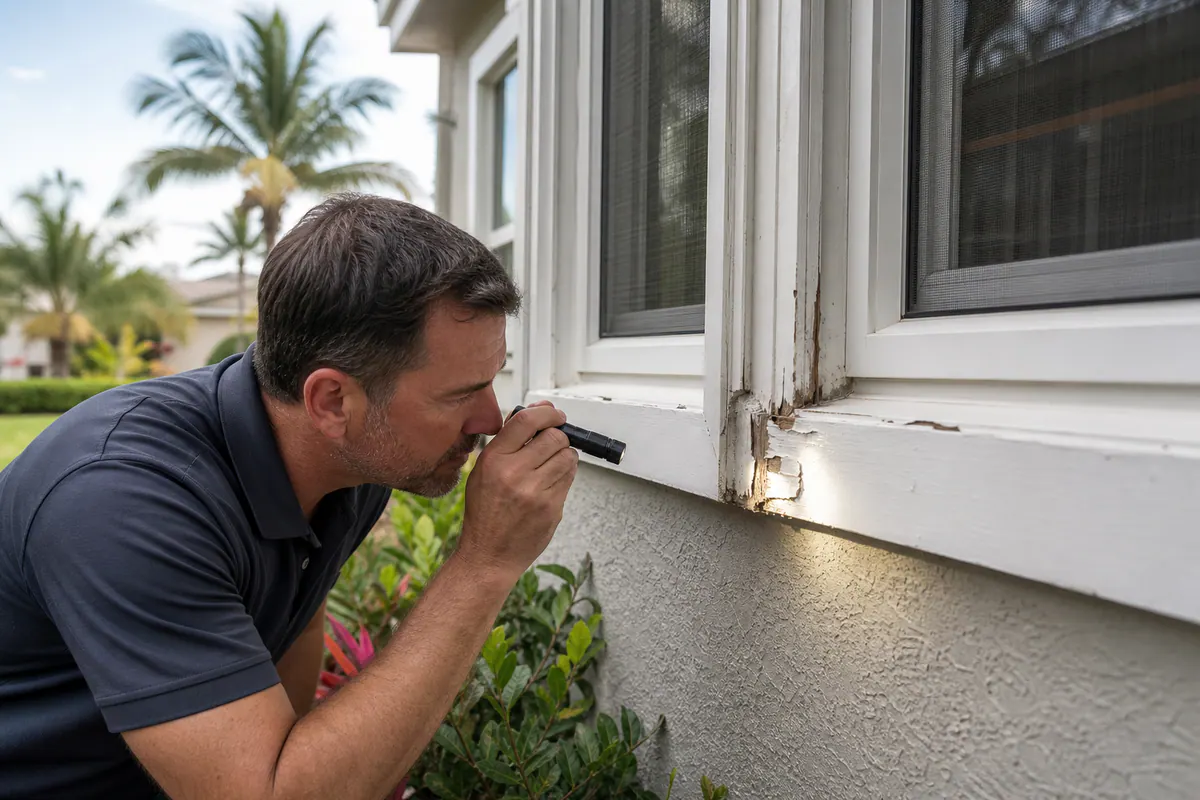
Exterior trim repair starts with looking past the finish. Peeling paint, cracked caulk, soft spots, swollen joints, and gaps where window or door casing meets the wall can be visible clues that water is reaching places it should not. A fresh coat of paint may improve the appearance, but it does not correct damp or weakened material behind it.
Different locations leave different clues. A small opening at a window or door casing joint can direct rain toward the trim-to-wall transition. Deteriorating fascia may point to water arriving from a roof edge, while loose soffit trim or porch-column wraps can expose seams and concealed backing. Sound, dry material around a localized flaw is a stronger repair signal than wood that compresses under light pressure or joints that have repeatedly opened.
In Southwest Florida, heat, humidity, wind-driven rain, and coastal exposure make careful evaluation worthwhile when trim begins to fail. The goal is not to assume every blemish means extensive damage; it is to identify the likely moisture path before sealing, patching, or replacing anything. Water-damaged exterior trim deserves attention while the affected area is still limited and the surrounding details can be assessed clearly.
A lasting fix begins by tracing the route water may be taking, rather than treating the most visible damaged board as the whole problem. Before we repair exterior trim, the assessment follows the trim’s vulnerable transitions: open miters and butt joints, separated caulk lines, exposed fastener holes, and edges that meet a wall, roof, or horizontal surface.
Soft trim is a reason to look beyond the face of the board, not an automatic conclusion that every concealed component is damaged. When the exposed material gives way, joints have opened repeatedly, staining extends onto nearby finishes, or an opening leads behind the trim, accessible sheathing, framing, siding, soffit backing, and wall transitions may need assessment before the area is closed again. Conversely, a sound, dry surrounding assembly points toward a more contained repair.
Correcting an open joint, redirecting runoff, or restoring a failed flashing transition changes the value of the finish work that follows. Without that step, even careful door trim replacement can merely cover the same moisture path instead of resolving it.
The deciding factor is the condition of the material that remains after loose paint, failed filler, and visibly damaged surface fibers are removed. A localized area may be suitable for exterior trim repair when the surrounding board is firm, dry, securely attached, and still able to support a sealed, finished detail. For example, a shallow defect on otherwise solid window casing or a small damaged section at a door jamb can sometimes be rebuilt after the affected area is properly prepared and the moisture path has been corrected.
That is different from simply covering a problem. Filler can restore a small, stable void, and caulk can close an appropriate finish joint, but neither turns soft wood into sound material. Paint, caulk, and patching are not substitutes for removing unsound trim or correcting active water intrusion. A good repair leaves solid material around the work area and a joint that can be sealed reliably; a weak repair leaves soft edges, trapped dampness, or a gap likely to reopen.
Rotted trim replacement is generally the better choice when decay extends through a board, the face crumbles under light pressure, or the trim has distorted enough that it no longer meets the wall, opening, or adjacent piece cleanly. It also makes sense when fasteners no longer hold, miters or butt joints repeatedly separate, or deterioration suggests that accessible backing materials need attention before new trim goes on.
Exterior trim replacement is not automatically the largest possible scope. It is a condition-based decision: remove compromised material, assess what is exposed, rebuild the detail with sound components, and finish the joints so the repaired area is not dependent on a cosmetic patch to keep water out.
The place where trim sits on the exterior often tells you what needs attention beside it. Window and door casing frame the opening and finish the gap between the unit and wall cladding; failed perimeter sealant, separated corner joints, or damage at sill and threshold areas can leave those transitions looking worn. Window trim replacement can sometimes be limited to one side, a head casing, or a sill-area detail when the adjoining trim and wall connection remain sound.
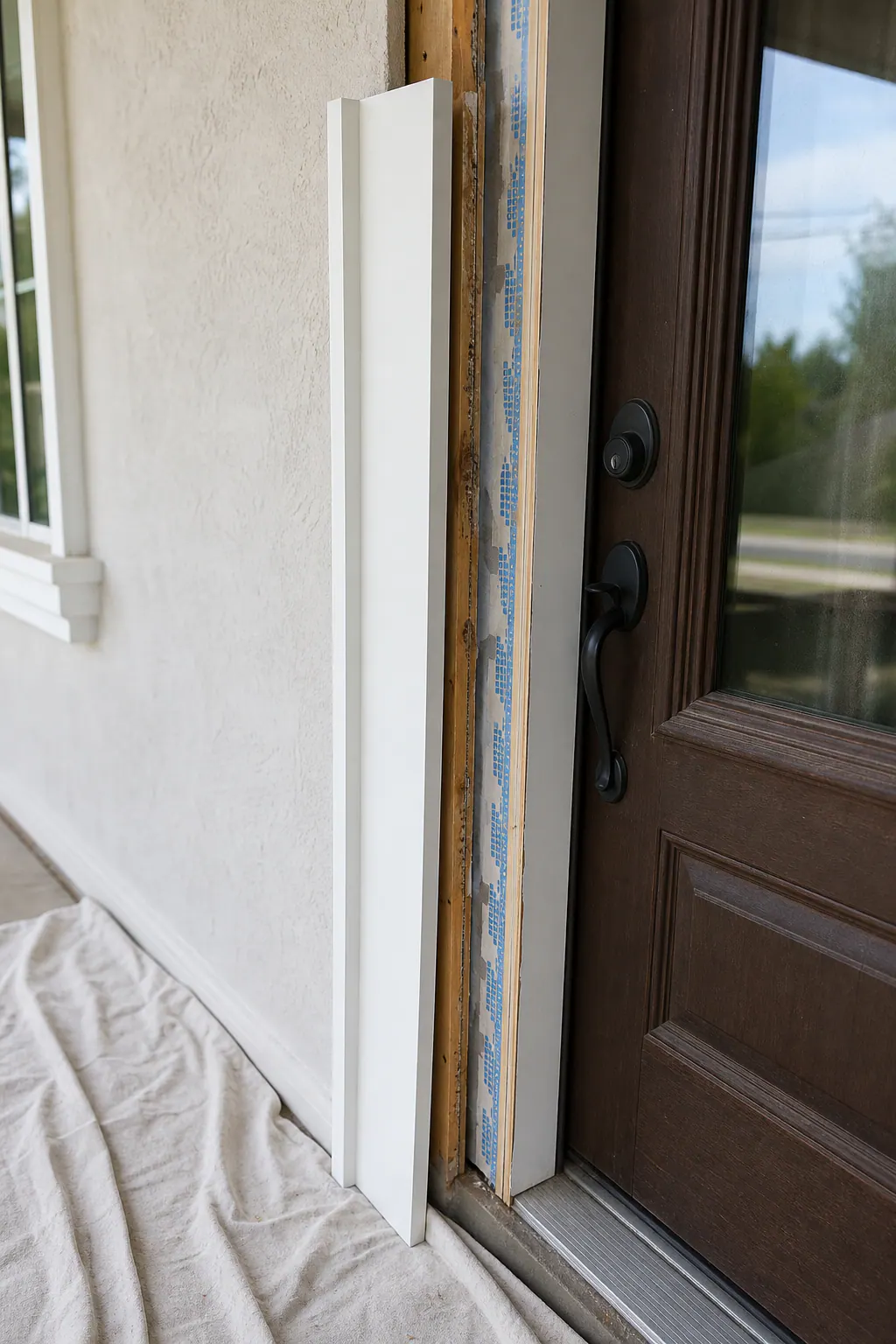
Targeted replacement does not automatically mean removing all adjacent siding. Casing can often be changed at a single opening, and a damaged fascia section may be addressed along one roofline, provided the connected cladding, backing, and transitions are in workable condition. The practical limit is how the pieces interlock: trim tucked behind siding, tied into a soffit, or joined to a column surround may require carefully opening a neighboring area to rebuild a clean, sealable connection.
Material choice should follow the detail being rebuilt, not a single rule for the whole house. A painted wood profile can be the right visual match for traditional window or door casing, especially where it must blend into existing woodwork. For replacement, the wood needs sound preparation on every cut edge and face, followed by a maintained paint system. Its familiar appearance and easy shaping are advantages; its tradeoff is greater sensitivity to recurring wetting when a joint, horizontal ledge, or end grain is left exposed.
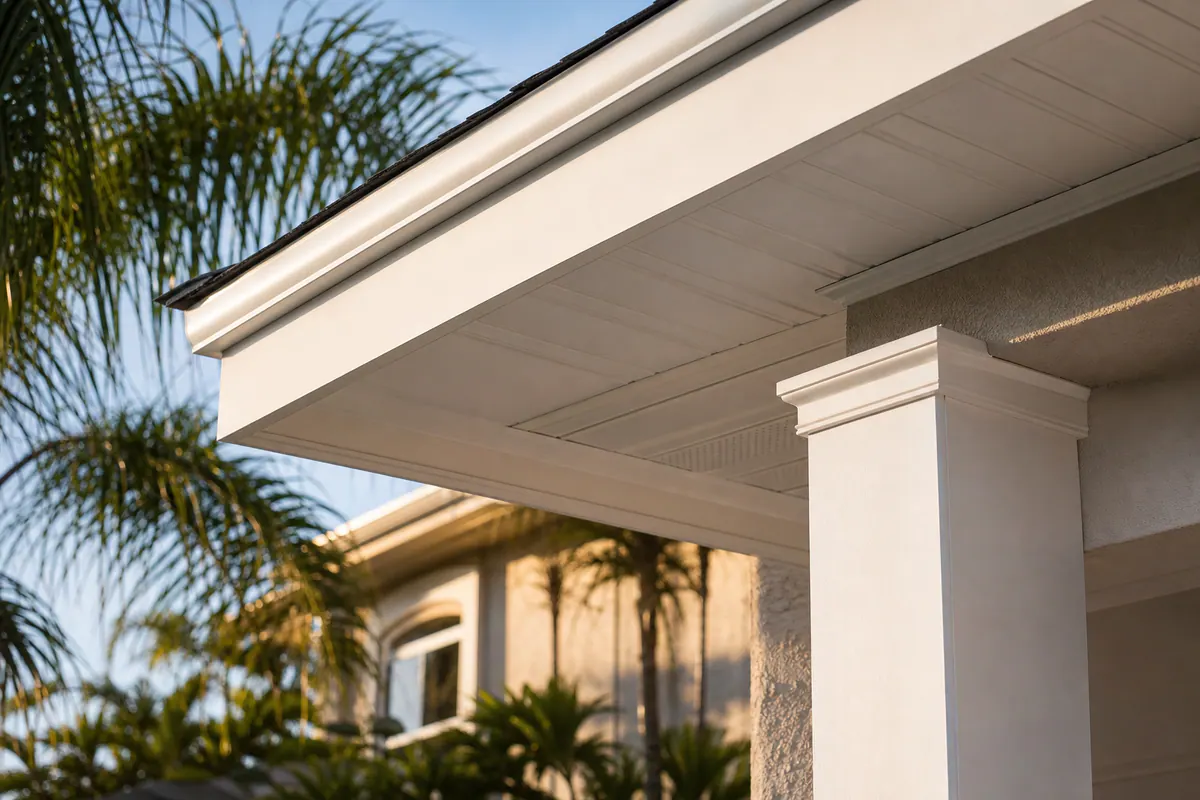
PVC exterior trim is not a substitute for a well-built connection. A good detail has supported backing, correctly placed fasteners, treated joints, sealed transitions where appropriate, and a finish plan that fits the product. A weak detail relies on tight-looking caulk to bridge an unsupported seam or covers a wet assembly with a new board. Periodic inspection still matters because sealant lines, paint, flashing transitions, and adjacent cladding can change over time.
The best choice weighs the trim’s location, the desired profile and paint finish, nearby siding or soffit materials, and what is found after compromised trim is removed. Water-resistant materials can improve resilience, but they perform best when the underlying assembly is dry, sound, and detailed to shed water rather than hold it.
A complete job is easiest to recognize by the work that happens before the new trim is visible. The work area should be protected, damaged boards removed without unnecessarily disturbing sound adjacent surfaces, and the exposed area examined for softened backing, loose cladding edges, or an unfinished transition that would undermine the new detail.
A final review should look at alignment, joint closure, exposed cut edges, fastener treatment, and the way the repaired area meets nearby siding, roofing, windows, or doors. Quality exterior trim repair is therefore more than a replacement board or fresh coat: it is a rebuilt connection designed to stay supported, shed water, and present a finished edge.
A soft lower corner of window casing, a fascia board that has pulled away from the roof edge, or a porch-column wrap with cracked seams is worth a closer look, especially after repeated wind-driven rain. For exterior trim in Sarasota County, an assessment can distinguish a small, firm area that can be rebuilt from a board that crumbles, flexes, or no longer holds a clean joint. The latter condition usually calls for replacement of the affected section.
An inspection or project estimate can address window and door casing, fascia, soffit edges, and porch trim. It should identify whether damage is limited to a miter, fastener line, horizontal ledge, or transition to siding or roofing, while also looking at the condition of the accessible backing. That helps keep an appropriate repair focused rather than expanding the scope without a condition-based reason.
Where replacement is needed, painted wood can preserve an existing profile, while cellular PVC or composite trim may be considered for moisture-prone details. The selected material still needs clean joints, secure fastening, and sealed transitions. Request an inspection or project estimate for soft, cracked, loose, weather-worn, or visibly rotted trim.
Compare the broader Exterior Trim Repair and Replacement service.
When you are ready, request a free estimate with the rooms, trim goals, city, and available photos.
Exterior trim commonly deteriorates when water enters through open miters, separated caulk lines, exposed fastener holes, failed flashing, or runoff at roof edges. In Southwest Florida, heat, humidity, wind-driven rain, and coastal exposure can accelerate damage at window casing, fascia, soffits, and porch trim.
Soft trim, repeatedly opened joints, staining on nearby finishes, and gaps leading behind the casing are signs that accessible sheathing, framing, siding, or wall transitions should be checked. Firm, dry, securely attached trim around a localized flaw is a stronger sign that the damage may be contained.
A localized defect can be repaired when the surrounding board is firm, dry, securely attached, and able to support a sealed finish. Replacement is the better choice when decay extends through the board, the face crumbles under light pressure, fasteners no longer hold, or joints repeatedly separate.
Yes, window or door casing can often be replaced at a single opening, and damaged fascia can be replaced along one roofline if connected cladding, backing, and transitions remain sound. Some adjacent siding or soffit may need to be carefully opened when trim is tucked behind it or interlocks with another exterior detail.
Cellular PVC is a strong option for repeatedly damp locations such as window sills, low porch trim, and column wraps because it is solid, paintable, and moisture resistant. Prepared wood is useful when matching an existing painted profile is the priority, while composite trim can suit selected fascia, corner, soffit, or decorative details; all options still require sound backing, proper fastening, and sealed transitions.
Tell us which rooms or trim details you want to improve, and we will shape the estimate conversation around the work.